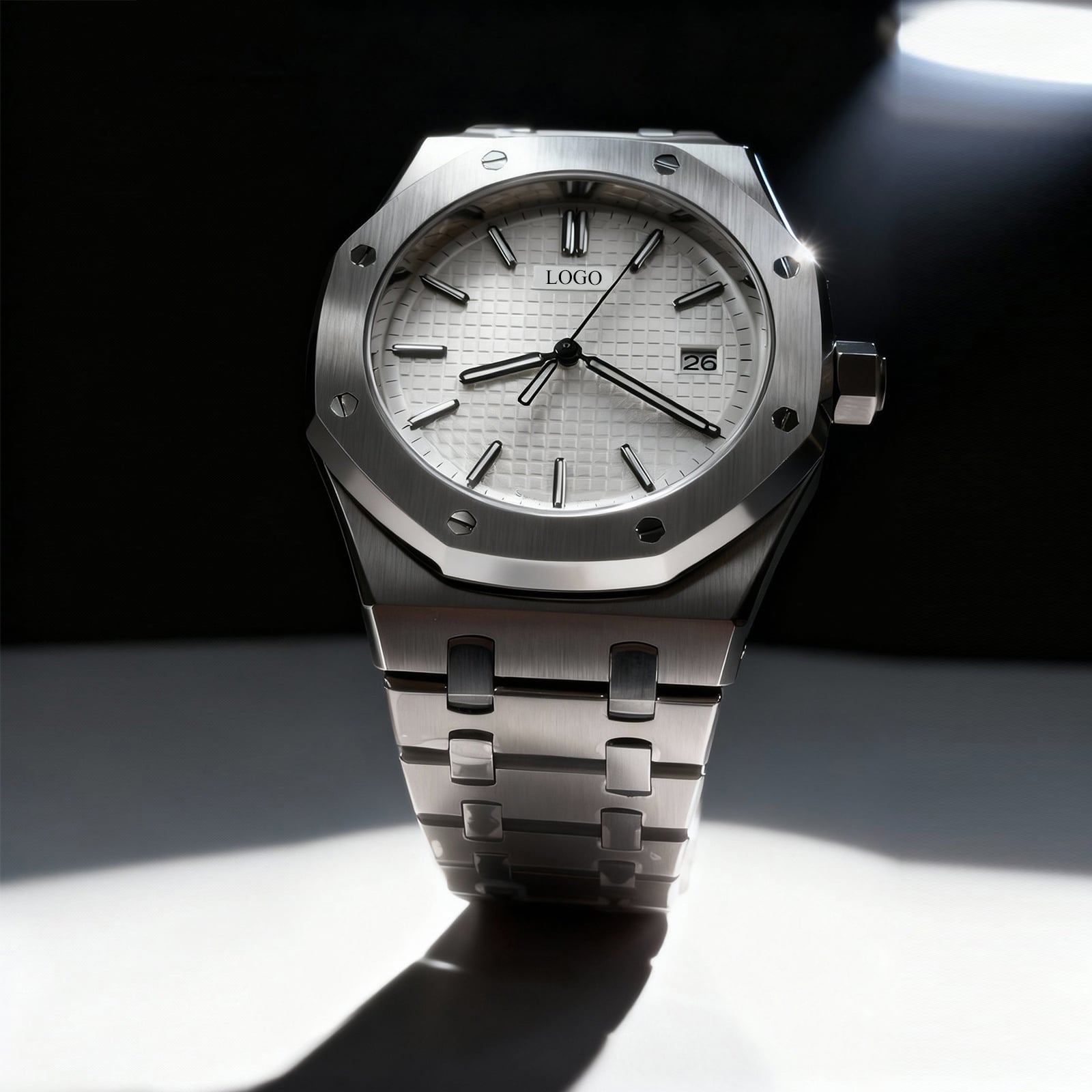
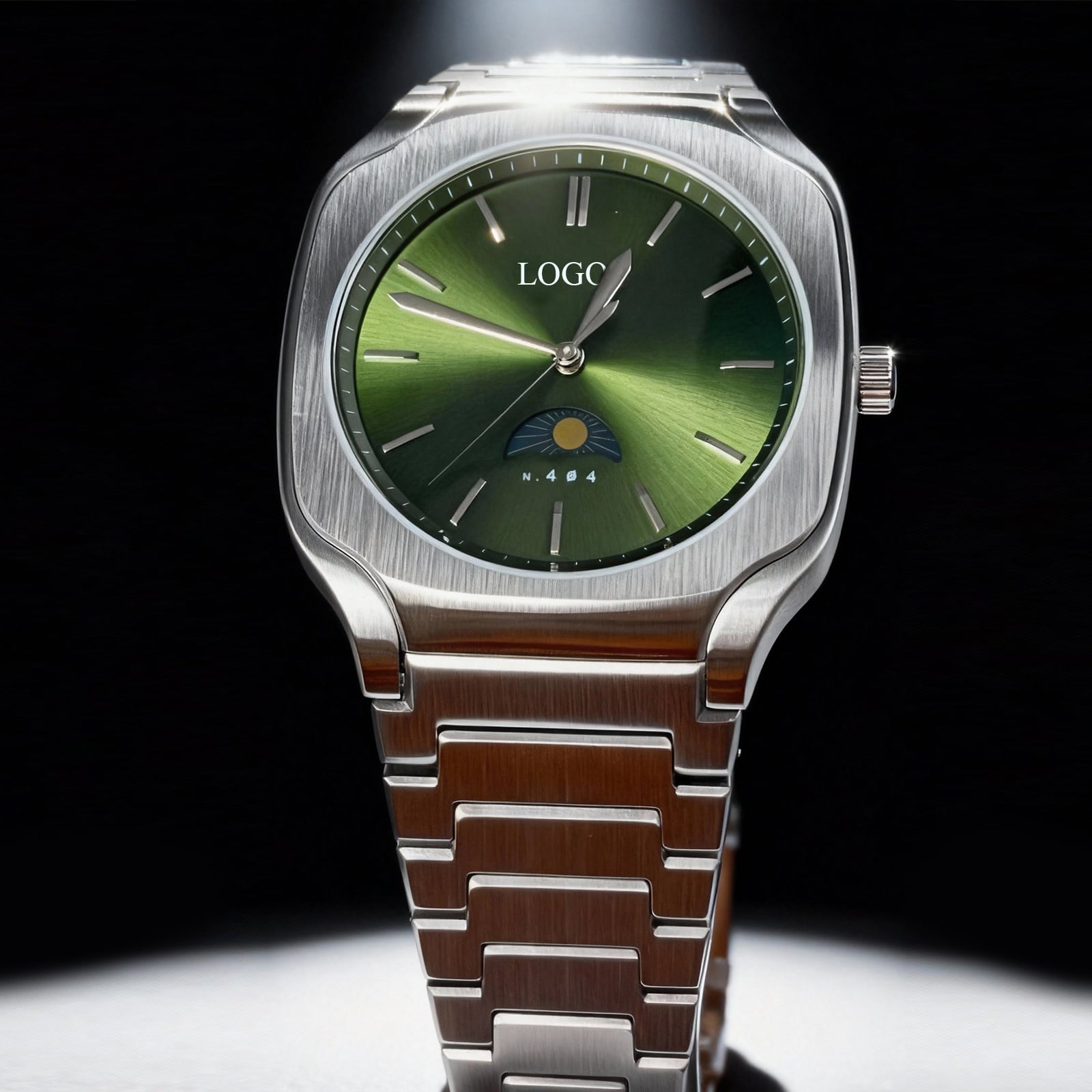
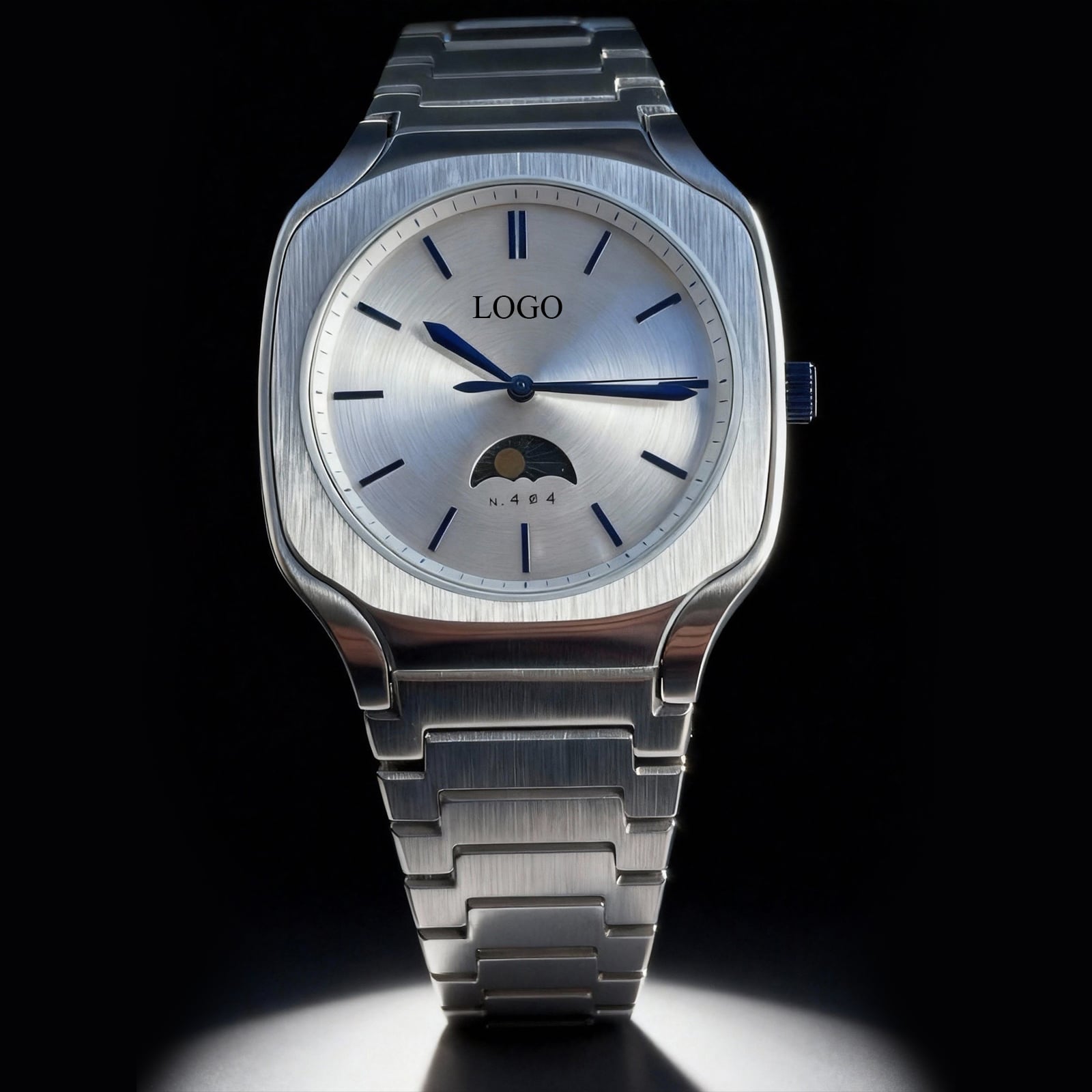
For a first watch collection, choose private label when an existing watch configuration already meets your essential requirements and the main work involves branding or confirmed appearance options. Choose fully custom development when the product depends on dimensions, construction, or features that an existing model cannot provide. Selected modifications may offer a middle route, provided their technical and commercial implications are understood.
The decision should follow the product you intend to sell. A distinctive logo does not necessarily require a new case, while a specific wearing experience may depend on dimensions and component relationships that branding alone cannot change.
This guide compares the routes for conventional quartz and mechanical watches, with an emphasis on the decisions buyers should resolve before committing to their first collection.
For this comparison, private label means starting with an existing watch design and applying your branding within the available customization scope.
Fully custom means developing a watch around a new product specification, with the necessary design, engineering, component development, and validation.
Between them is modification of an existing platform: retaining part of the original configuration while changing selected components or structural details.
These definitions describe development scope. The quotation should identify the actual work, regardless of whether a supplier calls it OEM, ODM, semi-custom, or private label.
| Decision point | Existing model with branding | Modified existing platform | Fully custom development |
|---|---|---|---|
| Starting point | An identified watch configuration | An existing design with a defined change list | A new product brief |
| Main design work | Branding and confirmed appearance options | Selected component or structural changes | Development of the specified watch design |
| Components retained | Most of the original configuration | Only those confirmed as suitable | Standard components may still be used |
| Engineering review | Confirm the chosen configuration and branding method | Review affected interfaces and specifications | Establish the configuration and its technical requirements |
| Sampling priority | Branding execution and the actual supplied configuration | Changed parts and their interaction with retained parts | Appearance, fit, function, and production feasibility |
| Commercial questions | Configuration availability, branding charges, variant quantities | Additional parts, tooling, sampling, and component minimums | Development stages, tooling, revisions, validation, and production costs |
| Suitable starting point | The existing product already satisfies the collection’s main requirements | A limited set of changes can deliver the required difference | The collection depends on a design that requires new development |
An existing design is not necessarily finished inventory ready for immediate dispatch. It may still require component purchasing, assembly, branding, inspection, and packaging.
Likewise, a fully custom watch does not automatically include development of a proprietary movement. Establish which parts are newly designed, which are adapted, and which are standard purchased components.
Before choosing a manufacturing route, write a short statement describing why a customer would choose your watch.
That statement might concern visual identity, legibility, wearing comfort, dimensions, functions, or a particular case and bracelet design. Translate it into requirements that can be reviewed in a drawing or sample.
For example:
Then separate essential requirements from preferences.
If an existing configuration meets the essentials, private label deserves consideration. If one or two changes would close the gap, investigate a modified platform. If the essential requirements cannot be achieved within the existing design, request a development assessment.
A useful rule is to choose the least extensive development route that can deliver the collection’s defined requirements.
A change can look minor in a rendering while affecting several physical components.
Changing a dial color is different from changing its dimensions or attachment. Replacing a strap is different from developing bracelet end links that must fit a particular case. Changing the movement may affect the case, dial, hands, and crown arrangement.
“Japanese automatic” or “Swiss quartz” is too broad for a final specification. Ask for the movement manufacturer, exact reference, functions, and the version proposed for your watch.
For illustration, MIYOTA lists both the 8215 and 9015 with a nominal size of 11½ lignes, but their published movement heights differ: 5.67 mm for the 8215 and 3.90 mm for the 9015. These are movement dimensions, not finished-watch thicknesses, and they do not establish interchangeability. MIYOTA 8215 specifications, MIYOTA 9015 specifications.
When a movement change is proposed, request confirmation of the relevant interfaces, including:
The quotation should reflect the resulting configuration, rather than treating the movement as an isolated upgrade.
Ask whether existing performance evidence covers the exact configuration being supplied.
For water resistance, ISO 22810 specifies requirements and verification methods for watches, including marking provisions. A proposed rating therefore needs relevant supporting evidence; a familiar case appearance is not sufficient. ISO 22810: Water-resistant watches.
If the case, crown, crystal, caseback, seals, or assembly arrangement changes, ask which previous results remain applicable and what additional verification is required.
Unit price alone cannot show which route is appropriate for a first collection.
Request a quotation that separates the following:
| Cost category | What to establish |
|---|---|
| Development | Design work, engineering review, drawings, and included revisions |
| Samples | Sample purpose, configuration, quantity, shipping, and revision charges |
| Tooling and setup | Charges for new components, fixtures, branding, or packaging setup |
| Production | Unit price for the agreed specification and quantities |
| Verification | Inspection and testing included in the price, plus separately charged work |
| Delivery | Packaging, freight, delivery terms, and excluded destination charges |
| After-sales preparation | Spare parts, replacement units, and agreed service arrangements |
A project using existing components may avoid some development work. However, special dials, unusual finishes, packaging, or small quantities across many variants can still materially change its commercial requirements.
For custom development, ask which charges are payable before production and what happens if the project stops after a sample stage.
A collection total can conceal several smaller production groups.
Ask whether minimum quantities apply by watch model, dial color, case finish, strap, bracelet, logo version, or packaging design. Confirm which variations can share an order minimum and which require separate commitments.
An illustrative collection with three dial colors and two strap options creates six saleable combinations. It does not necessarily create six separate production minimums; that depends on which components are shared and how the supplier organizes the order.
Obtain the quantity breakdown before deciding how many launch variants to offer.
A digital rendering, an existing-model sample, and a production-representative sample serve different purposes.
The approval process should make those differences explicit.
First, review the proposed specification.
Confirm the product reference, movement, dimensions, materials, finishes, branding locations, and requested changes. Record unresolved items.
Second, approve the visual layout.
Check logo placement, dial text, proportions, colors, and caseback artwork. A rendering can support appearance decisions, but it cannot establish physical fit or performance.
Third, assess a representative physical sample.
Review wearing comfort, readability, crown operation, hand alignment, finishing, and strap or bracelet fit. Ask the supplier to identify any differences between the sample and intended production, including temporary components or alternative manufacturing processes.
Fourth, authorize production against a controlled specification.
Connect the approved sample to a dated specification and revision number. Record the agreed inspection criteria, required performance evidence, and permitted variation.
A sample that looks correct should not leave its movement, material, or finish undocumented. Conversely, approval of artwork should not be interpreted as approval of every functional characteristic.
After approval, changes should identify the affected parts, additional costs, schedule consequences, and whether another sample or test is needed.
Ask for a schedule that identifies the conditions for each stage to begin.
Depending on the project, those stages may include specification review, artwork approval, component sourcing, tooling, sample production, revisions, production authorization, assembly, inspection, and shipment.
Clarify what “lead time” means in the quotation:
For a first collection, compare proposed schedules against the decisions you still need to make. A quoted production period is only one part of the time required to prepare a product for sale.
Use the confirmed project milestones when planning photography, product descriptions, launch announcements, and inventory availability.
The initial collection should also establish how the product can be reordered and supported.
For an existing model, ask how configuration changes and component discontinuations will be communicated. Confirm whether a reorder can use the same movement reference, dial specification, finish, and strap or bracelet.
For custom development, establish who retains the approved drawings, component specifications, and production records. Agree on access to tooling, its maintenance arrangements, and the conditions for future production.
Address exclusivity separately. Branding an existing design does not, by itself, establish an exclusive product. Paying for development also leaves questions that should be resolved in writing, including the scope of any exclusivity and the permitted reuse of designs or tooling.
For either route, discuss replacement straps, bracelet links, crowns, and other relevant service parts, together with repair or replacement responsibilities.
A first order is easier to evaluate when the proposal explains how the same product will be supplied and supported later.
The following examples illustrate the comparison framework. They are hypothetical scenarios, not customer case studies.
A new lifestyle brand finds a watch with suitable dimensions, functions, and wearing comfort. Its main requirements are a branded dial, caseback artwork, and coordinated packaging.
Starting point: Existing-model private label, subject to confirmation of the requested branding and packaging options.
A brand is satisfied with an existing case and movement but needs a different dial arrangement and a bracelet that fits the case precisely.
Starting point: Review a modified platform. Confirm the dial and bracelet interfaces, additional component requirements, and sample stages before comparing its cost with new development.
A brand’s concept depends on a particular case profile and proportions that available models cannot provide.
Starting point: Fully custom development, beginning with feasibility, dimensions, movement integration, and a staged sampling plan.
The appropriate route follows the requirement that cannot be compromised.
It can be a suitable starting point when an existing watch meets the product brief and the main work involves branding. It is less suitable when the collection depends on dimensions, construction, or functions that the existing configuration cannot deliver.
The development route alone does not establish quality. Evaluate the agreed specification, component suitability, assembly, inspection, and evidence supporting product claims. A custom design still needs clear acceptance criteria and production control.
Yes, the collections can be planned as separate projects. Record what the first collection teaches you about customer preferences, wearing comfort, returns, and requested features. Confirm the later development scope independently; costs, components, and minimum quantities may differ.
Provide a reference model or concept, essential dimensions and functions, preferred movement if known, requested branding or design changes, quantities by variant, budget parameters, and target delivery date. Clearly distinguish essential requirements from preferences.
CultiCraft’s published service descriptions present both existing-design private label work and fully custom watch development. The available modifications, component choices, and development requirements should be confirmed for the specific project. CultiCraft watch project options.
For an initial discussion, send a short brief covering:
Ask the response to distinguish what can use an existing configuration, what requires additional development, and what remains subject to technical review.
 EN